History of Williamsburg, Iowa
Williamsburg, located on a bend of Old Man's Creek, was founded in 1854 by Richard Williams, who operated a steam sawmill north of the creek. Richard Williams was born 1814 in Montgomeryshire, Wales and may have lived in Ruthin, Denbighshire before emigrated to the United States. His first wife was Jane Tudor and second wife was Ann Evans.
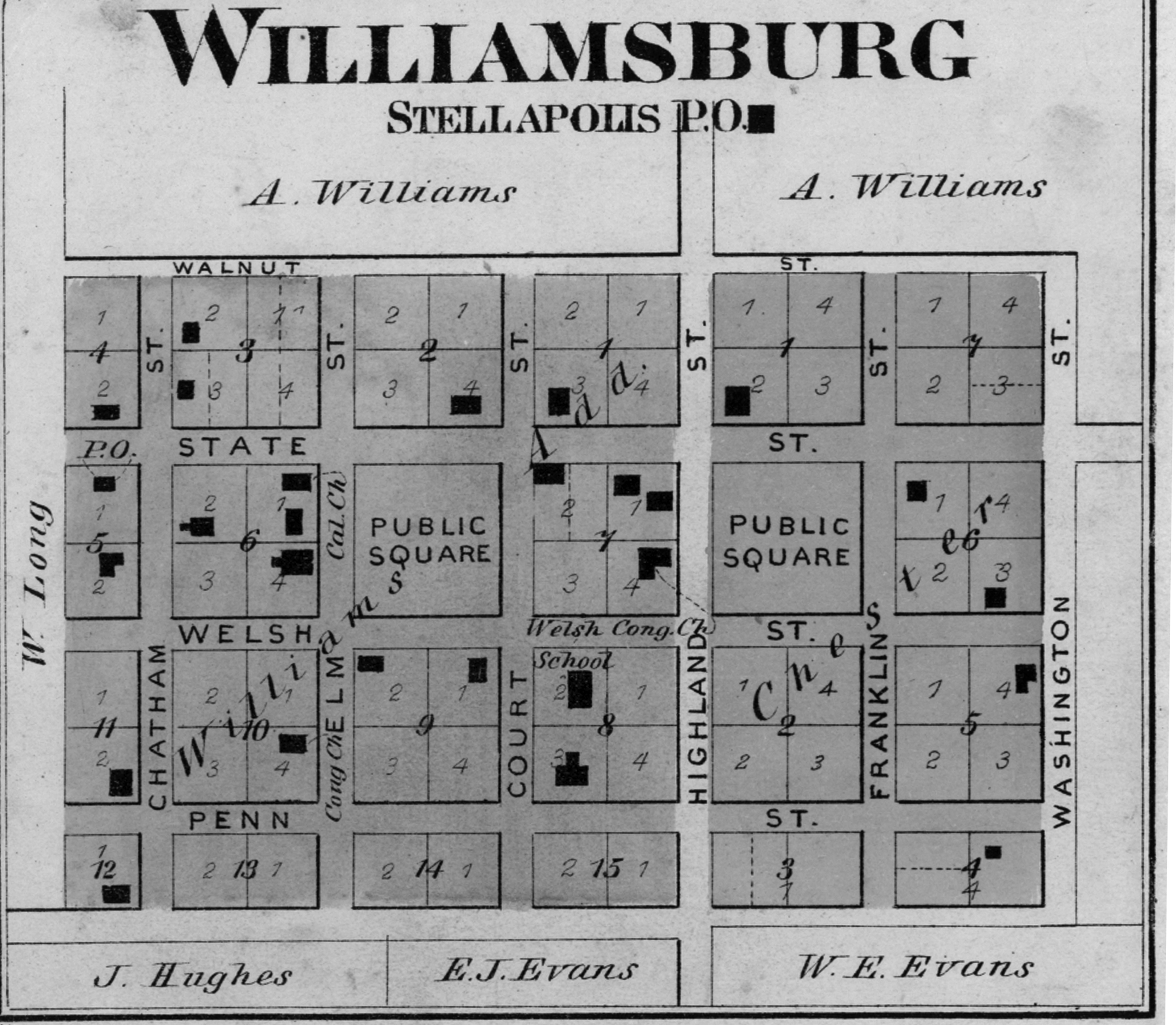
Williams platted the original town site on forty acres south of farmland he owned, which is the part of Williamsburg immediately east of Highland Street (Highway 149).
In 1856 Williams decided his first plat wasn't suited to be an "inland" town so he added the 40-acre Williams Addition southwest of the original site. The Williams Addition is today's business district.
Until 1860 Williamsburg's mail service was provided by post offices east of the village, but when the Rock Island Railroad reached Marengo that year Williamsburg petitioned to have its own post office, and a man named Homer Paige was named postmaster. Paige's family included three daughters, the youngest named Stella. Her father incorporated her name into the new post office he was to serve and called it "Stellapolis"-"Stella's City." The family moved to Des Moines but "Stellapolis" was the official name for the Williamsburg post office for 29 years. Today the name survives in the local Masonic Lodge, Stellapolis Lodge No. 391.
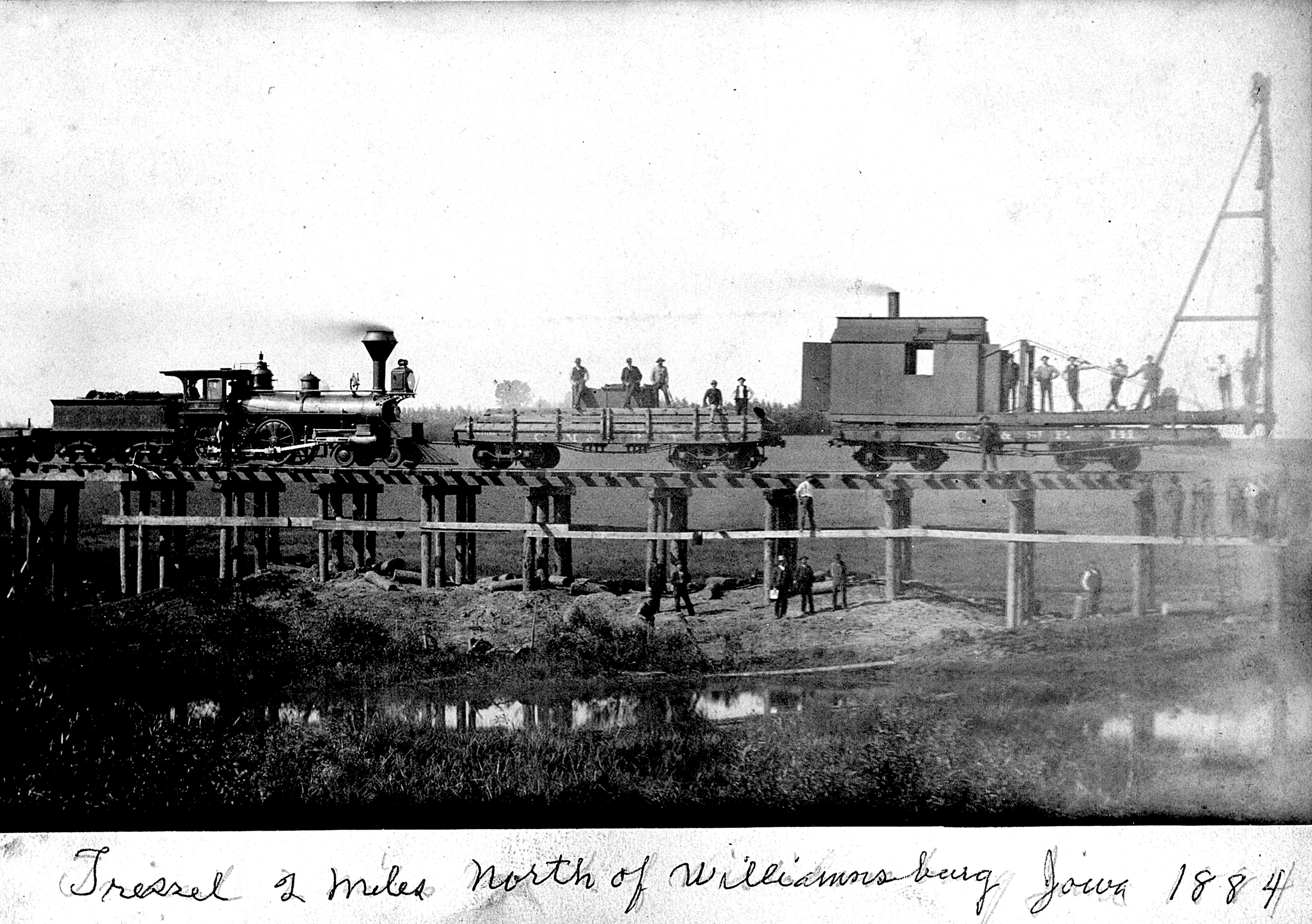
Williamsburg remained a small Welsh community until the Chicago, Milwaukee and St. Paul Railroad built a line from Cedar Rapids to Ottumwa in 1884. The railroad line went through Williamsburg. Almost overnight the community grew from 150 hardy souls to more than 1,000, and in 1885 the town was incorporated.
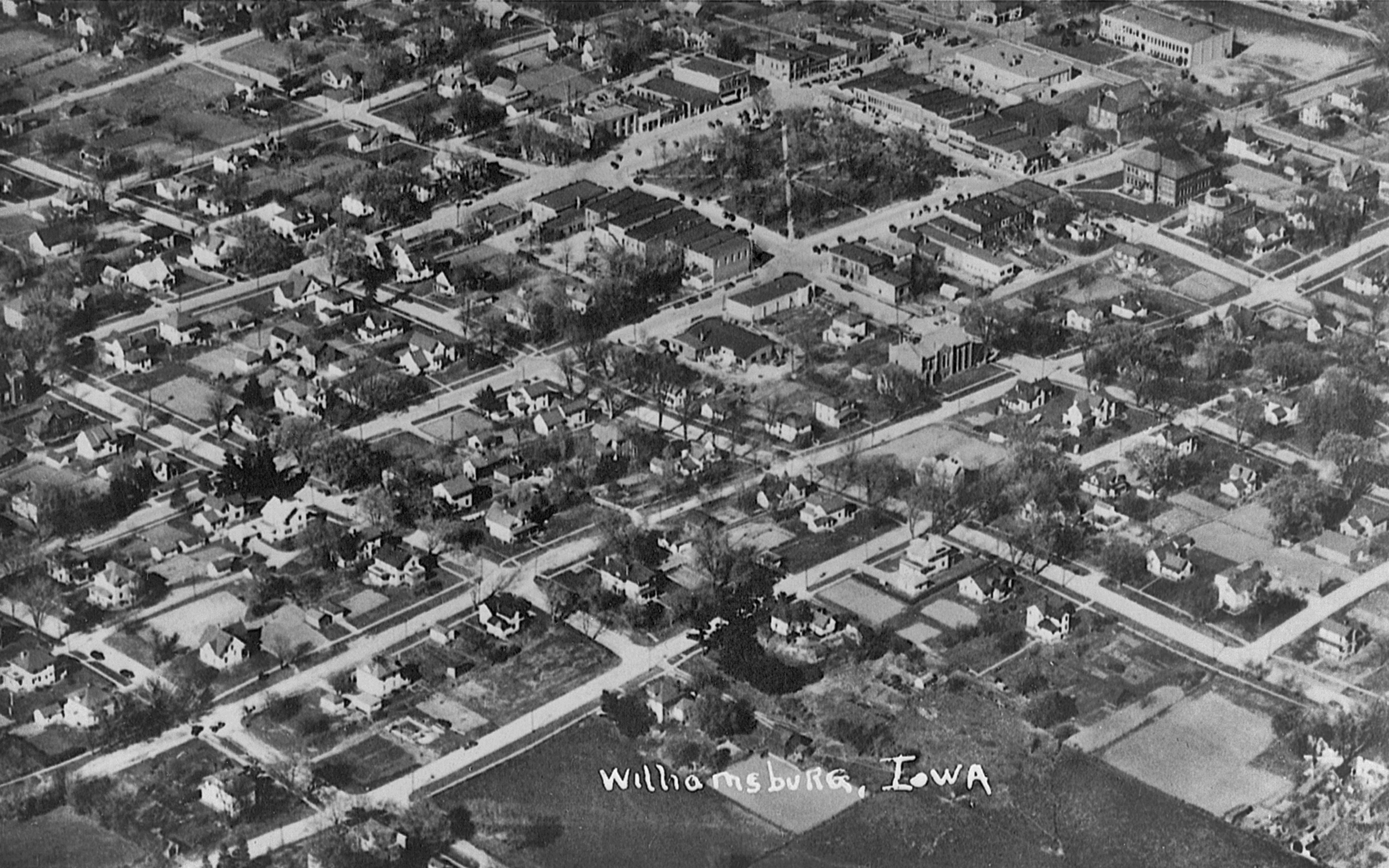
Settlements of Welsh pioneers just east of Williamsburg and settlements of Irish in the same area led to a gradual influx of those people into the city. More Irish settlers arrived after the coming of the railroad. After the turn of the century, German immigrants began to arrive in the area spreading out from their original settlements north and west of Williamsburg. Early settlers in the Williamsburg area also included some Scottish and Scots-Irish folk.
About Us
Founded in 2003 as the Williamsburg Historical Commission and reorganized in 2007 as the Williamsburg Historical Society, this 501(c)(3) nonprofit is dedicated to preserving and sharing the community’s rich heritage. The Society maintains five historic properties and offers extensive research resources, including more than 32,000 local obituaries, thousands of digitized and microfilmed newspapers, and over 4,000 historic photographs. Along with guided tours and educational programs, it helps local graduates and families plan reunions, connecting past and present generations. Through its collections, events, and outreach, the Society ensures Williamsburg’s history is remembered and celebrated for years to come.